

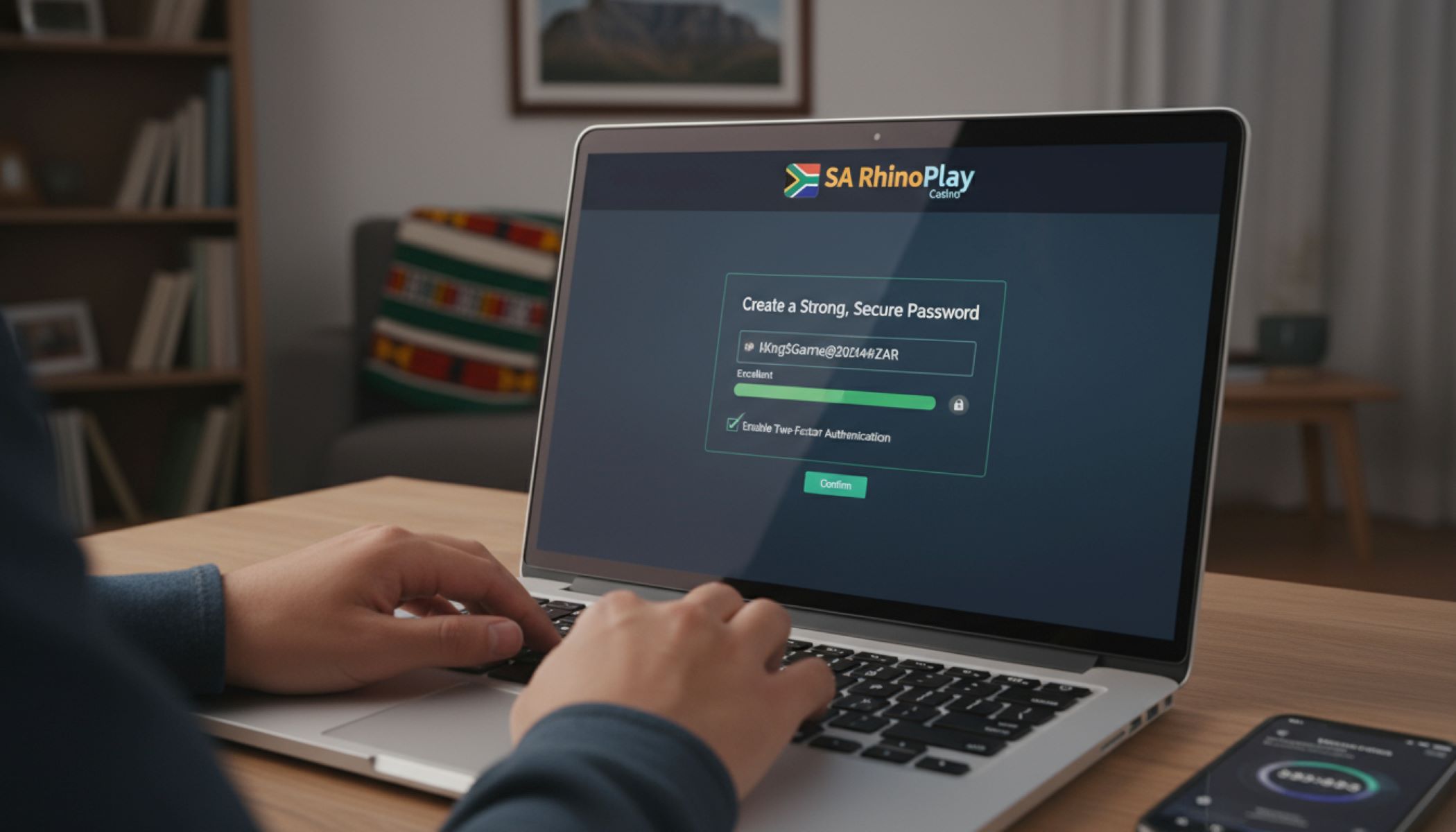
South Africa’s rapid digital transformation has brought unprecedented opportunities alongside escalating cybersecurity threats. As businesses and individuals increasingly rely on digital platforms, the nation faces a critical challenge: widespread poor password habits and inadequate account security measures. Recent studies reveal alarming trends in local cybercrime, with weak passwords serving as the primary entry point for malicious actors targeting both personal and business accounts.
The consequences of compromised account security extend far beyond individual inconvenience, threatening the integrity of South Africa’s growing digital economy. Robust password management and comprehensive account security measures have become essential safeguards for protecting sensitive personal information, financial data, and critical business assets against an evolving landscape of sophisticated cyber threats.
Understanding the Threat Landscape in South Africa
South African organizations and individuals face a unique convergence of cybersecurity challenges, with password-related vulnerabilities serving as the primary attack vector. The country’s rapid digitization, coupled with insufficient cybersecurity awareness, has created an environment where cybercriminals exploit weak authentication practices through sophisticated phishing campaigns, password spraying attacks, and social engineering schemes targeting local contexts.
The threat landscape is further complicated by emerging attack vectors specifically tailored to South African users, including SMS-based phishing exploiting mobile banking popularity, business email compromise targeting local procurement processes, and credential harvesting campaigns leveraging familiar South African brands and government entities. These attacks often succeed due to the prevalence of weak password practices and limited user training across various sectors.
Research indicates that South African users frequently fall victim to attacks that would be easily preventable with proper password management and security awareness. The combination of increasing connectivity, limited cybersecurity education, and the use of personal information in passwords creates a particularly vulnerable environment for both individual users and organizations.
Local cybersecurity incidents demonstrate the urgent need for comprehensive password security measures, as attackers increasingly focus on exploiting the human element rather than sophisticated technical vulnerabilities. Understanding these specific threats is crucial for developing effective security strategies tailored to the South African context.
Recent Trends in Local Attacks and Incidents
Cybersecurity incidents in South Africa reveal distinct patterns of attack methodologies and their devastating impact on local organizations and individuals. These trends highlight the critical importance of robust password management and account security measures.
| Attack Type | Prevalence | Impact |
|---|---|---|
| Phishing Campaigns | 85% of organizations targeted | Average R2.4 million losses per incident |
| Credential Stuffing | 67% increase in 2023 | Compromised banking and retail accounts |
| Ransomware Attacks | 42% of SMEs affected | 14-day average business disruption |
| Password Spraying | 78% targeting government entities | Data breaches affecting citizen records |
Common Risk Behaviours Among South African Users
Comprehensive studies of South African password practices reveal concerning patterns that significantly increase vulnerability to cyber attacks. These behaviours, often driven by convenience rather than security considerations, create substantial risks for both personal and organizational data security.
- Password reuse across multiple platforms, with 73% of users employing identical passwords for banking, email, and social media accounts
- Incorporation of personal information such as ID numbers, birth dates, and family names, making passwords easily guessable through social engineering
- Use of common dictionary words and predictable patterns, including “password123”, local sports teams, and sequential numbers
- Sharing credentials among colleagues and family members, particularly prevalent in small business environments
- Storing passwords in unsecured locations such as browser auto-save functions, sticky notes, and unencrypted documents
Principles of Strong Password Management
Effective password security begins with understanding the fundamental characteristics that distinguish strong passwords from vulnerable ones. Length serves as the primary defense mechanism, with passwords containing at least 12 characters providing exponentially greater security than shorter alternatives. Complexity requirements should encompass uppercase and lowercase letters, numbers, and special characters, while ensuring unpredictability through random generation rather than predictable patterns.
Uniqueness represents another critical principle, mandating distinct passwords for every account and service. This practice prevents credential stuffing attacks and limits the impact of individual data breaches. The National Institute of Standards and Technology (NIST) guidelines emphasize the importance of eliminating common password requirements that paradoxically weaken security, such as mandatory character rotations that encourage predictable modifications.
Local SETA (Sector Education and Training Authority) recommendations specifically address the South African context, highlighting the risks associated with using personal information prevalent in local identity documents, addresses, and cultural references. These guidelines stress the importance of avoiding surnames, ID numbers, and birth dates that can be easily obtained through social engineering or data mining.
The principle of least privilege extends to password management, ensuring that account access levels align with specific user requirements. This approach minimizes potential damage from compromised credentials while maintaining operational efficiency.
Modern password management also emphasizes the importance of secure storage and transmission. Passwords should never be stored in plain text, shared via unsecured communication channels, or written down in accessible locations. Instead, cryptographic hashing with appropriate salt values provides the security foundation for password storage systems.
Comparing Weak vs. Strong Passwords
Real-world password examples demonstrate the stark security differences between common weak passwords and properly constructed strong alternatives. This comparison illustrates the practical implications of password choices in the South African context.
| Example | Exposure Risk | Crack Time | Suitability |
|---|---|---|---|
| john1985 | Extremely High | 2 minutes | Completely Unsuitable |
| Springboks2023! | High | 3 hours | Poor |
| Tr9$mK2#vL8nQ | Low | 34,000 years | Excellent |
Best Practices for Password Policies and User Education
- Establish minimum password length requirements of 12 characters, with recommendations for 16+ characters for sensitive accounts and administrative access
- Implement complexity requirements that encourage unpredictability while avoiding overly restrictive rules that promote poor user practices
- Mandate unique passwords for each system and account, supported by password manager adoption to facilitate compliance
- Design regular password change policies based on risk assessment rather than arbitrary timeframes, focusing on immediate changes following security incidents
- Develop comprehensive user training programs tailored to South African contexts, including local threat examples and culturally relevant scenarios
- Create graduated enforcement mechanisms that provide education before punishment, encouraging voluntary compliance through awareness rather than fear
- Establish clear incident response procedures for password-related security events, including breach notification and remediation steps
Targeted Interventions for Poor Password Habits
Effective password security education requires segmentation based on user behavior profiles and risk levels. High-risk users, identified through security assessments or incident history, benefit from intensive one-on-one training sessions that address specific vulnerabilities and provide personalized guidance for improvement. These interventions often prove more effective than generic awareness campaigns.
Local campaigns leveraging South African cultural references and familiar scenarios increase engagement and retention. Training materials featuring recognizable local banks, government services, and popular online platforms help users understand real-world applications of security principles. Regular reinforcement through short, focused sessions maintains awareness without overwhelming users with complex technical concepts.
Checklist: Core Elements of a Robust Password Policy
- Minimum length specifications with clear justification and examples of compliant passwords
- Secure storage requirements prohibiting plain text passwords and mandating encrypted password managers
- Change triggers based on security events, suspected compromise, or employee role changes rather than calendar schedules
- Account lockout procedures that balance security with usability, including clear recovery processes
- Multi-factor authentication requirements for sensitive systems and privileged accounts
Technologies for Securing Passwords and Accounts
| Technology | Purpose | Local Relevance | Adoption Hurdles |
|---|---|---|---|
| Password Managers | Generate and store unique passwords | Essential for banking and government services | User education and trust concerns |
| Multi-Factor Authentication | Add verification layers beyond passwords | Critical for mobile banking prevalence | SMS reliability and smartphone access |
| Biometric Authentication | Fingerprint and facial recognition | Aligns with national ID initiatives | Device compatibility and privacy concerns |
| Password Encryption | Protect stored credentials | Compliance with POPIA requirements | Implementation complexity and costs |
| Security Training Platforms | Educate users on best practices | Address local threat scenarios | Language barriers and engagement levels |
The adoption of password security technologies in South Africa faces unique challenges related to infrastructure limitations, cost constraints, and varying levels of technical literacy. While urban areas benefit from robust internet connectivity supporting cloud-based password managers and real-time authentication, rural regions often struggle with connectivity issues that impede multi-factor authentication reliability.
Cost considerations significantly impact technology adoption, particularly for small and medium enterprises that represent a substantial portion of South Africa’s economy. Budget-conscious organizations often prioritize immediate operational needs over cybersecurity investments, despite the long-term risks. Educational initiatives focusing on the cost-benefit analysis of security technologies help overcome these barriers.
Infrastructure challenges extend beyond connectivity to include device compatibility and software support. Many South African users rely on older devices or operating systems that may not support advanced authentication methods, creating security gaps that require alternative approaches and gradual upgrade strategies.
How Password Managers Work – Benefits and Pitfalls
Password managers function as secure digital vaults that generate, store, and automatically fill unique passwords for each user account. These tools employ advanced encryption algorithms to protect stored credentials while providing convenient access through a single master password or biometric authentication. For South African users managing multiple banking, government, and social media accounts, password managers eliminate the need to remember numerous complex passwords while ensuring each account maintains unique credentials.
Despite their security benefits, password managers face adoption resistance due to concerns about single points of failure and trust issues. Users worry about the consequences of forgetting master passwords or experiencing service outages that could lock them out of critical accounts. Addressing these concerns requires education about offline access capabilities, robust backup procedures, and the comparative risks of current password practices versus managed solutions.
Controlling Access: Permissions, Authentication and Audit
- Role-based access control systems that align user permissions with job responsibilities and organizational hierarchy
- User group management enabling efficient permission assignments and regular access reviews
- Multi-factor authentication requirements for administrative accounts and sensitive system access
- Biometric authentication integration where supported by hardware and organizational policy
- Comprehensive audit trails tracking authentication attempts, permission changes, and account access patterns
- Automated monitoring systems that detect unusual access patterns and trigger security alerts
Comparing Authentication Methods
Authentication method selection requires balancing security strength with practical usability considerations, particularly in the diverse South African technological landscape. Each approach offers distinct advantages and limitations that must be evaluated within specific organizational contexts.
| Authentication Type | Security Strength | Ease of Use | Prevalence in SA |
|---|---|---|---|
| Single Factor (Password) | Low | High | Very High (89%) |
| Two-Factor (SMS/Email) | Medium | Medium | Moderate (34%) |
| Multi-Factor (App-based) | High | Medium | Low (12%) |
| Biometric Authentication | Very High | High | Low (8%) |
Effective Auditing and Monitoring Practices
Comprehensive audit systems require systematic log management that captures authentication events, permission changes, and access patterns across all systems and applications. These logs must be stored securely, regularly reviewed, and integrated with threat detection systems to identify suspicious activities promptly. Effective auditing extends beyond technical logging to include regular access reviews that verify user permissions align with current job responsibilities.
Suspicious activity response procedures should define clear escalation paths and remediation steps for various threat scenarios. This includes automated responses for detected brute force attacks, manual investigation processes for unusual access patterns, and communication protocols for potential security incidents. Regular testing of these procedures ensures rapid and effective responses when security events occur.
Building a Security Culture: Training, Compliance and Continual Improvement
Creating a sustainable security culture requires comprehensive educational initiatives that extend beyond one-time training sessions to ongoing reinforcement and skill development. Organizations must recognize that security awareness represents a continuous process rather than a checkbox exercise, particularly as threat landscapes evolve and new attack vectors emerge. Effective programs combine formal training with practical exercises, real-world simulations, and regular assessment to ensure knowledge retention and application.
Compliance frameworks such as PCI DSS provide structured approaches to security implementation, but successful adoption requires adaptation to local contexts and organizational capabilities. South African organizations benefit from SETA interventions that provide industry-specific guidance and financial support for security training initiatives. These programs recognize the unique challenges facing local businesses and offer tailored solutions that balance security requirements with practical constraints.
Ongoing reassessment ensures security measures remain effective against evolving threats and changing business requirements. This process involves regular security audits, user feedback collection, and policy updates that reflect current best practices and emerging threats. Organizations must establish clear metrics for measuring security culture effectiveness and invest in continuous improvement based on assessment results.
Tailoring security programs for local profiles considers linguistic diversity, varying technical literacy levels, and cultural factors that influence security behavior. Successful programs provide materials in multiple languages, accommodate different learning styles, and recognize that security practices must integrate seamlessly with existing workflows to achieve sustainable adoption. Regular communication about emerging threats specific to South African users maintains awareness and engagement over time.
Measuring Improvements in Security Behaviour
- Track phishing susceptibility rates through regular simulated campaigns and measure improvement trends over time
- Conduct periodic security audits that assess password strength, policy compliance, and system configuration against established baselines
- Monitor security incident frequency and severity to evaluate the effectiveness of training and technical controls
- Measure user engagement with security training programs through completion rates, assessment scores, and feedback quality
- Assess compliance levels with established security policies through systematic reviews and automated monitoring tools